
Which Dog Holds the Title for Strongest Bite?
Any dog bite can be dangerous. Canine teeth rip and tear at the skin and flesh rather than cutting it, and this – along with the inherent risk of infection – means that even the bite of a smaller, less aggressive breed can be serious. There is no denying, however, that some dog breeds have very strong and very dangerous bites. Knowing which dogs are most likely to cause significant damage can help you better protect yourself and those you love.
If you have suffered injuries as a result of someone else’s dog biting you, don’t wait to consult with an experienced New Jersey dog bite lawyer.
Dog Breeds and Bite Strength
The power behind a dog’s bite can vary considerably by breed.
Bite Force
Bite force is measured in terms of PSI, which refers to pound-force per square inch or, more simply, pounds per square inch. This measure demonstrates the breed’s bite strength at full capacity, which dogs generally only employ when they are defending themselves or their pups.
The shape of the animal’s head and jaw play a significant role in the pressure they’re capable of exerting in a bite. It’s important to note that a breed’s bite strength is not indicative of its level or aggression or any other related risk factor, but it does mean they can cause serious physical damage.
Dog Breed Bite Force Compared to Other Animals
As a point of reference, consider the bite force of other powerful animals – as reported by Zooologist.com – including:
- The bite of a lion and most other big cats scores a PSI of about 1,000.
- The bite force of a wolf is about 400 PSI.
- The strength of a human bite averages between 120 and 160 PSI.
Dog Breeds with the Strongest Bite Force
The dog breeds with the strongest bites may surprise you and include:
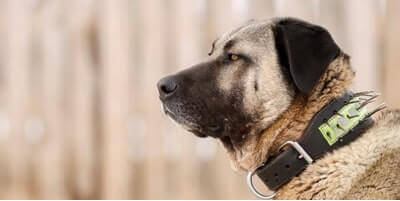
Kangal
What dog has the strongest bite? The bite force of the Kangal is reported to be 743 PSI, which makes it the most powerful bite.
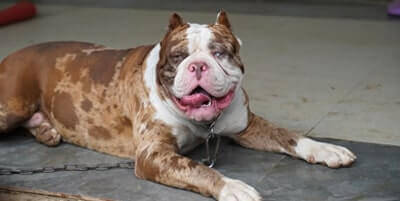
American Bandogge
The bite force of the American bandogge, which is a cross between a bulldog and mastiff, comes in at a whopping 730 PSI.
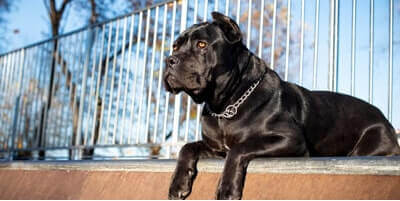
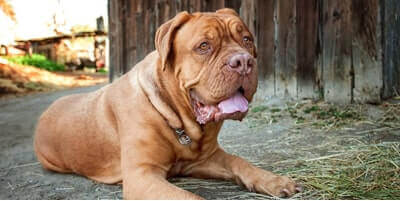
Dogue de Bordeaux
The Dogue de Bordeaux is also called a French mastiff. This is one of the largest dog breeds, and it has a bite strength of 556 PSI.
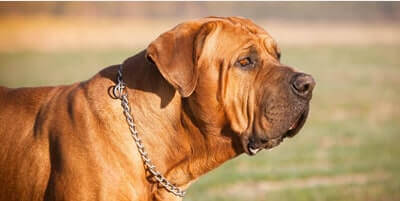
Tosa Inu
The Tosa inu ties with the Dogue de Bordeaux for bite force – with a rate of 556 PSI. This breed is known for being a loyal watchdog.
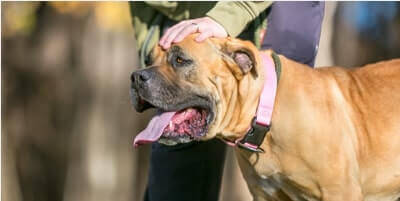
English Mastiff
The English mastiff also has an average bite strength of 556 PSI and is beloved for its gentle-giant qualities.

Dogo Canario
The Dogo Canario has an impressive bite force of 540 PSI and was originally bred as a war dog.

Dogo Argentino
The Dogo Argentino is a loyal companion and skilled hunting dog with an average bite force of 500 PSI.

Wolfdog
The wolfdog is a mix between a domestic dog and a wolf, and its average bite strength has been measured at about 406 PSI.
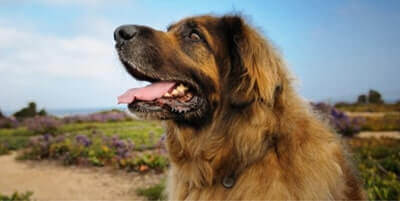
Leonberger
The Leonberger, one of the largest breeds on the list of strong bites, can weigh in at 170 pounds and has a bite strength of 399 PSI.
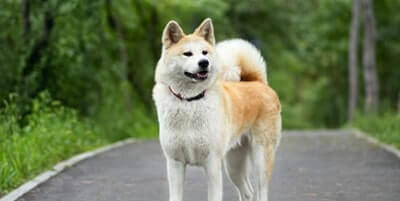
Akita Inu
The Akita Inu has the instincts of a guard dog and an average bite force of 350 to 400 PSI.

Rottweiler
The rottweiler is a popular breed in the United States that makes an excellent guard dog and has an average bite strength of 328 PSI.
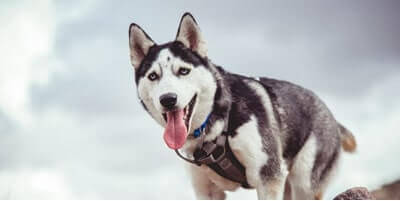
Siberian Husky
The Siberian Husky makes a high-energy pet, and their bite force averages 320 PSI.

African Wild Dog
The African wild dog is an excellent hunter with a powerful 317 PSI behind its bite.

American Bulldog
The American bulldog is a family favorite, and it has a bite PSI of 305.
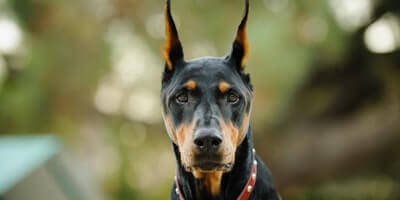
Doberman
The Doberman strikes a fine figure of a dog and has a healthy bite force of 245 PSI.

German Shepherd
German shepherds are popular pets, and they pack a bite strength of 238 PSI.
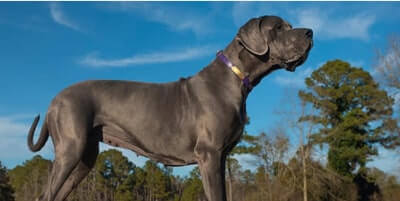
Great Dane
The Great Dane is one of the tallest dog breeds out there, and its bite strength is 238 PSI.

American Pit Bull Terrier
The American pit bull terrier is a smaller breed that is known for its strength and determination. These dogs have an average bite power of 235 PSI.

Labrador Retriever
The Labrador retriever is a favorite of dog lovers across the nation, and its bite strength averages 230 PSI.
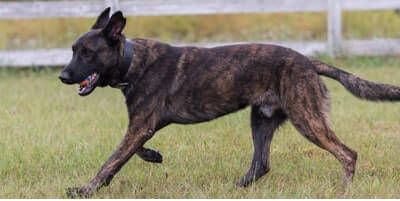
Dutch Shepherd
Dutch Shepherd – The Dutch shepherd is a herding dog with an average bite force of 224 PSI.

Chow Chow
The chow chow has a well-loved bear-like appearance and an impressive bite force of 220 PSI.
As a reminder, a dog breed doesn’t have to make this list to pose a risk, and being on this list
does not necessarily make the breed more aggressive or more dangerous.
Calculating Bite Force
According to NPR Science Focus, the bite force of dogs and other animals hinges on the following variables:
- Their jaw muscles
- Their jawbones
- The surface area of their teeth
Bite force also varies in relation to the size of whatever it is the animal is biting. The PSI measurement is calculated in terms of the amount of force that is applied per square inch. The more powerful the breed’s jaw muscles and jawbones, the higher the PSI measurement.
Unmasking the Causes: Exploring the Reasons Behind Dog Bites
Dogs don’t bite because they are a specific breed, and most dogs don’t bite on a whim. Instead, according to the ASPCA, dogs tend to bite for highly specific reasons that are prudent to recognize and avoid.
Fear
Dogs naturally want to protect themselves, their young, and their owners, and anything that jeopardizes their ability to do so can lead to aggression. Fear is a serious motivator across all dog breeds.
Possessiveness
Dogs tend to be possessive about their food, treats, and toys, and they can also exhibit possessiveness about their territories and the spaces they protect. Entering the space of a dog that is unknown to you or taking something out of any dog’s mouth is always ill-advised.
Protection
Protection is similar to possessiveness, but it relates to the dog’s desire to protect itself, its pups, or its people from anyone – or any animal – that it perceives as threatening their safety.
Domination or Social Aggression
Dogs have an inherent hierarchy that they’re inclined to maintain, which generally translates to aggression toward other dogs but can extend to people. A dog that is exerting domination is attempting to correct the rift in its experience of natural hierarchy, which can be impossible for humans to recognize or understand.
Predatory Aggression
Dogs are animals that have innate behaviors that include predatory behaviors. A fast-moving object can excite a dog into chasing it at top speed.
Frustration
When a dog can’t access what it wants or needs to get at, it can lead to the same type of frustration that people experience. As this frustration builds, it can manifest as aggression.
Illness or Injury
Dogs tend to be possessive about their food, treats, and toys, and they can also exhibit possessiveness about their territories and the spaces they protect. Entering the space of a dog that is unknown to you or taking something out of any dog’s mouth is always ill-advised.
Protection
A dog that is ill or injured can become uncharacteristically aggressive as a means of protecting itself. Pain and the stress it causes are closely associated with aggression in dogs.
Some of the medical conditions that are most closely associated with newly acquired aggression include:
- Chronic pain
- Seizures
- Brain injuries or conditions
- Hypothyroidism
- Low calcium levels in dogs that are lactating
The Risk Factors as They Apply to Dog Bites
There are a range of factors that increase the risk that a dog will bite and – if it does – the risk that the bite will prove serious.
The Dog’s Size
The larger the dog, the more dangerous its bite is, and the more damage it can cause. In other words, the risk factor for larger dogs is more considerable than it is for very small dogs.
The Dog’s Age
A young dog that exhibits aggressive tendencies is generally more trainable than an older dog who is set in its aggressive ways or who may have adopted aggressive tendencies over the years. The adage that you can’t teach an old dog new tricks is based in reality.
The Dog’s History of Aggression
A dog that has already bitten someone lets its owner know – in no uncertain terms – that it poses a bite risk. Dog owners are responsible for protecting the public from this established danger.
The Dog’s Targets
A dog owner who knows their dog’s targets can take the steps necessary to limit risk. For example, a dog who reacts aggressively to children needs an owner with very limited interactions with children and who has an alternate means of exercising the pet – rather than at dog parks or walks in public. A dog whose aggression is only triggered by strangers who enter their owner’s property is generally less risky when out in public.
The Dog’s Predictability
The dogs that are the most dangerous are pets that afford little or no warning prior to attacking and whose aggression has no predictable pattern. It’s far more difficult to protect the public from dogs that bite according to their own whims.
The Dog’s Motivations
Some dogs are easily motivated – such as by a treat or bone – and others are less so. The more highly motivated the animal, the more beneficial training is likely to be.
The Severity of the Dog’s Aggression
A dog that employs signs of aggression but draws the line at biting is far more likely to be a safe pet than one who is incapable of controlling its aggression and follows through with a bite. Common warning signs of aggression include:
- Becoming stiff and rigid like a statue
- Barking in a threatening, guttural manner
- Lunging at or charging the victim
- Mouthing the victim without applying significant pressure as a means of con trolling them
- Muzzle-punching the victim
- Growling outright
- Baring teeth
- Snarling viciously
- Snapping at the air
- Making quick nips that don’t leave a mark on the victim
From here, things become even more serious, including the following in order of progression:
- Taking quick bites that tear the victim’s skin
- Biting that causes bruising
- Biting that causes puncture wounds
- Biting repeatedly in rapid succession
- Biting and shaking the victim
Dogs do not necessarily follow any pattern in the buildup to aggression, and they can engage in multiple forms of aggression simultaneously, which makes proceeding with the utmost caution around dogs that you don’t know well the best practice.
Unveiling the Truth Behind Controversial Canines: Decoding Dog Breeds
It’s not all about what dog has the strongest bite when it comes to determining which dog breeds are the most dangerous or unpredictable. According to the American Veterinary Medical Association (AVMA), the breed is only one factor among many in the matter of dog bite risk.
The Implicated Breeds
Across a wide range of dog bite studies, the following breeds are cited most often in terms of biting incidents:
- German shepherds
- Mixed breed dogs
- Pit bull-type dogs
- Rottweilers
- Jack Russel Terriers
Runners up include:
- Chow chows
- Spaniels
- Collies
- Saint Bernards
- Labrador Retrievers
Within-Breed Variation
AVMA concludes that it is inappropriate to predict how aggressive a dog is likely to be based solely on its breed. Instead, it’s important to carefully gauge each dog and each situation according to the information available to you and to always proceed with all necessary caution. The fact is that any dog – of any breed – can prove dangerously aggressive, and many pit bulls make fine pets that never harm anyone.
A Focus on Pit Bulls
In the category of dog bite incidents that involve very serious injuries or fatalities, the pit bull type category consistently outpaces all other breeds by a considerable margin. AVMA, however, reports that variables other than breed may contribute to this finding, including:
- The popularity of the breed in the community in question
- The way the dog is treated by its owner, such as if it’s used as a fighting dog
- Reporting biases related to the breed’s reputation
- Misidentification of the breed based on overall appearance, which is not highly reliable,
and on the fact that it is a fairly ambiguous breed that is open to some interpretation
Owners of pit bull-type dogs face a strong breed stigma, even though controlled scientific studies that test for a range of relevant variables don’t identify the breed as disproportionately aggressive.
Analyzing Head Size Impact: Investigating the Influence on Dog Bites Using the U.S. Government Analytics
According to the American Animal Hospital Association (AAHA), factors like a dog’s weight and head shape can play a significant role in how likely they are to bite and how severe the bite is likely to be. Dogs that weigh between 66 and 100 pounds and whose heads are short and wide are the most likely to inflict dangerous bites.
Considerations
Every dog has its own personality and its own history in terms of how it’s been treated by its owners. Further, it’s impossible to know how a dog feels at any given moment, such as if it might be experiencing pain or an illness. While the breed is a variable to consider when it comes to risk factors, it’s far from the only concern. Never take your own safety or the safety of those you love for granted when it comes to dogs you don’t know. Any dog can bite, and any dog bite can prove dangerous.
Statistics Shared
The National Institute of Health published a study that identifies dog bites as a significant public health issue and shares the following sobering statistics:
- In a recent nine-year stretch, dog bites led to 1.1 percent of all emergency room visits.
- This makes dog bites number 13 in terms of the top 20 reasons for visiting an emergency room in the U.S.
- Dog bites exceeded emergency room visits related to both motorcycle and pedestrian accidents, which ranked 14th and 15th, respectively.
The Centers for Disease Control and Prevention (CDC) also forwards serious dog bite statistics – as shared by the AVMA – that include all the following:
- Every year in the U.S., more than 4.5 million people suffer dog bites.
- More than 800,000 people each year require medical attention for their dog bites.
- Those most vulnerable to dog bites are children who are between the ages of 5 and 9 and generally don’t have the awareness to accurately assess the associated risk.
The Insurance Information Institute (III) shares dog bite statistics of its own, including:
- There are about 85 million dogs living in this country, and about 69 million households include dogs.
- Dog bite liability claims totaled $1,136 million in 2022.
- The average dog bite claim increased by 31.7 percent in 2022 – rising from $49,025 in 2021 to $64,555 in 2022.
- The State of New Jersey ranked 9th in the list of states with the highest number of dog bite claims in 2021 but ranked 6th in terms of claim value.
New Jersey is no stranger to dog bite injuries and claims.