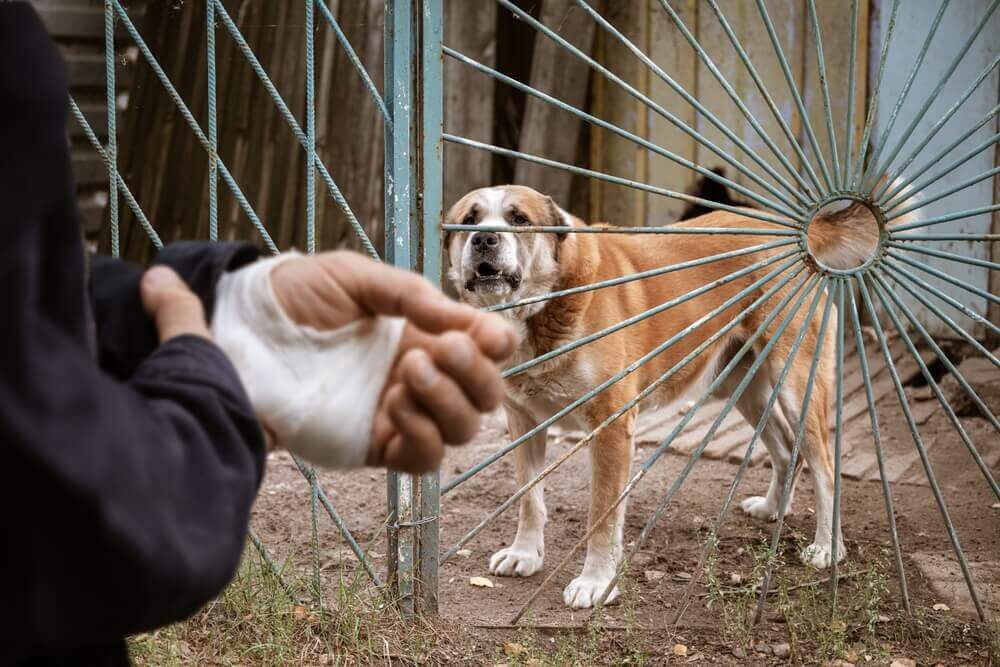
In Paterson, New Jersey, in March of 2014, a 115-pound bull mastiff who was loose in the street attacked two 13-year-old boys, killing one and wounding the other. The dog then turned on its owner, who was forced to stab the dog in self-defense. Ultimately, the dog was euthanized by […]
In Paterson, New Jersey, in March of 2014, a 115-pound bull mastiff who was loose in the street attacked two 13-year-old boys, killing one and wounding the other. The dog then turned on its owner, who was forced to stab the dog in self-defense. Ultimately, the dog was euthanized by authorities. The body of the boy who had died could not be located for two hours—his family had reported him missing before his remains were found.
Dogs biting their owners is probably more common than you might think. In fact, the family a dog lives with is actually most likely to get bit if the dog is going to bite. The younger a child in the home is, the more likely he or she is to get bit and that the bite will be severe. About half of dog bite fatalities involve new babies brought home from the hospital to a home with a dog. In scenarios where a newborn is introduced into the home, dogs who were locked in crates or in kennels outside have escaped to track down the baby and kill it.
If your family dog is nipping or displaying any signs of aggression, especially an unneutered male dog, it would be wildly irresponsible to ignore those signs.
What Causes Dogs to Bite
It can be difficult to pinpoint one exact reason why a dog is biting, as so many of these “symptoms” are generic to any negative dog behavior. It’s also important to remember that even a docile breed that is well-trained can get aggressive at any moment—it may not be likely, but every dog owner who is being completely honest has seen their dog act out of character at one time or another for no real reason.
Having said that, common reasons dogs may resort to nipping, mouthing, play biting, and injurious biting are:
Excitement (being chased, new playmate, overstimulation, doorbell rings)
Impatience (dinner is late, riding in the car too long, leash biting)
Scared (being put in a small cage for the first time, new surroundings)
Stress (getting ill or injured, giving birth)
Your dog is a breed with a higher prey drive
Lack of exercise (some breeds need an hour of rigorous exercise every single day)
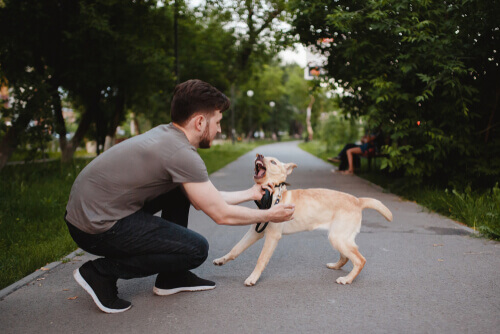
Mouthing or gumming is a fairly common behavior for any dog. However, the dog’s demeanor during these worrisome incidents is the deciding factor in knowing whether that biting is intended to be fun or is pre-attack. What is your dog’s body language saying? Was your dog relaxed and calm while nipping or mouthing? A wrinkled-up snout can be an indicator of play behavior. On the other hand, if your dog’s face and posture are tense and flexed, mouthing or nipping is considered aggressive and should be an immediate red flag.
If your dog’s teeth were exposed, hairs standing up, or chest puffed out, that does not indicate playful behavior. Another fairly dead giveaway is whether your dog’s bite was quick and firm or whether your dog was more casually, slowly gnawing and nibbling as it would with a chew toy.
Stopping Your Dog from Biting
You are responsible for your dog’s behavior. If your dog is biting, it falls on your shoulders to combat the behavior. From a legal standpoint, if your dog were to injure someone, the judge, jury, and insurance company will rightfully take the stance that you acted negligently, not your dog. If you are noticing aggressive behavior in your dog, even a small “harmless” breed like a Chihuahua or Dachshund, we recommend taking the following steps:
We’re going to assume if your dog is biting that, it hasn’t been to obedience school or through a dog training program. This is crucial, not just to teach your dog to sit or drop a toy, but because you’ll learn how a dog views your role as “leader of the pack” and how you need to understand that mentality.
Follow through on what you learned in dog training—consistency is key in training a dog. If you are realizing you don’t have the energy to deal with “toddler energy” 24/7, now might be a time to consider rehoming your dog. Every time your dog jumps at a houseguest, nips at a child, or yanks on the leash, you must respond. If your dog knows it can get away with biting 20% of the time (when you’re distracted, when dad’s home, late at night, or whenever), your dog will recognize this and keep biting under those circumstances. Are you sending a clear, unequivocal message that biting is wrong any time, anywhere, with anyone?
Do not leave your dog cooped up in the house or backyard! Poorly socialized, isolated dogs become fearful and territorial…both behaviors that preempt attacks. Your dog needs to be exposed to any and all kinds of people regularly. If at all possible, opt for a trip to the dog park instead of a hike up an empty trail, for example. Walk your dog during peak “dog walking hours” in your neighborhood (usually 7-9 am and 7-9 pm) instead of playing fetch in the backyard alone for half an hour. Remember, other people are not responsible for socializing your dog (being patient if your dog jumps on them, being pleasant if your dog lunges at them)—it’s your job to ensure your dog isn’t lunging and jumping. If your dog isn’t there yet, you need to tighten up the leash, possibly get a muzzle, pull your dog to the side of the walkway, and keep training.
Always use positive reinforcement like “atta boys,” petting, and healthy snacks. If your dog is disobeying, it’s far more effective to give “the silent treatment” (i.e., turn away with your arms crossed) than to yell, get angry, use a shock collar, or simply usher your dog back into the kennel.
What If My Dog’s Bites Are Aggressive?
The Centers for Disease Control has said that dog bites are “common events” and occur in “normal families.” If that doesn’t concern you after discovering your dog is capable of aggression, you need to understand that your children are most likely to get hurt by your dog, and your homeowner’s insurance may not cover you in a dog bite injury claim if your dog is a restricted breed, and that the average dog bite claim costs the owner closer to $50,000 than to $5,000, as many assume. Dogs are the third most dangerous animal on earth because of how many owners, children, neighbors, passers-by, and houseguests they send to the hospital and morgue.
If your dog has shown their willingness to bite or act aggressively, this is something that very rarely can be “trained” out of them. Remember, dogs were bred for centuries and centuries to hunt birds, protect herds, and even fight. A few generations of Americanized living isn’t going to undo their DNA. While the bite you experienced or observed from your dog this time might not have caused injury, that doesn’t mean the next one won’t.
It’s Time for Some Difficult Questions
Far too many dog owners look away when their dogs jump on children, nip at houseguests, and bark at joggers. Only 4% of dogs attend training programs or obedience schools. 54% of dogs in the US are overweight, in part because 30-60% of dog owners do not exercise their dogs enough. It’s time to really examine your priorities if you know that your dog is aggressive. Most dog owners are not willing to put in the time at obedience school and on daily walks or jogs, and they rationalize away their dog’s red flags—this is really what endangers your family and friends more than anything.
Typically, when a dog acts out, an owner who has failed to train and exercise the dog will then chain the dog up in the backyard, thinking as long as the risk is “contained,” everything will be fine. Sadly, these are the bored, neglected dogs that escape and attack more often than almost any other scenario based on our experience. In court, we hear dog owners saying that they knew their dogs were aggressive way too often.
If you’ve reached a point where your aggressive dog is quarantined in the backyard and being otherwise neglected, we can’t encourage you enough to take action. Calling a professional dog trainer is an absolute must. Please contact a board-certified veterinary behaviorist (Dip ACVB) or a Certified Applied Animal Behaviorist (CAAB or ACAAB) right away. If there are not any of these experts in your area, try a Certified Professional Dog Trainer (CPDT) with education and experience treating aggressive dogs.
We Are New Jersey Dog Bite Lawyers!
Dog bite cases are all we do. Call us today at Call us today at (866) 259-4377 or reach out via our contact form. We have over 25 years of experience and have offices in Egg Harbor Township and Newark.
Related Posts
Learn what to do after a dog bite, understand your rights under New Jersey law, and get answers to common questions about dog bite injury claims.