
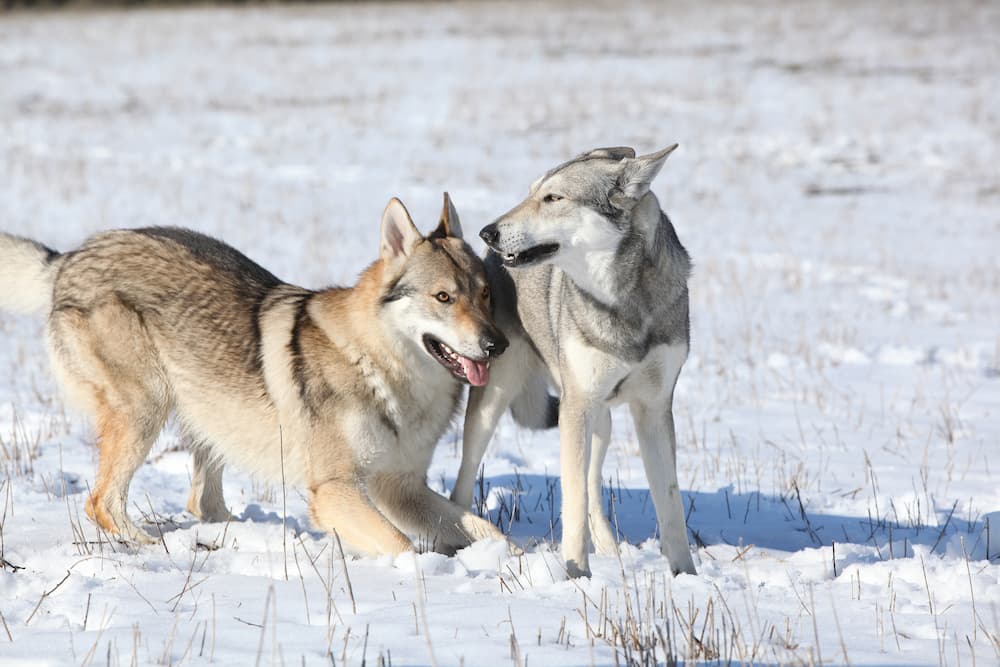
Is It Playful, or Is It Aggressive?
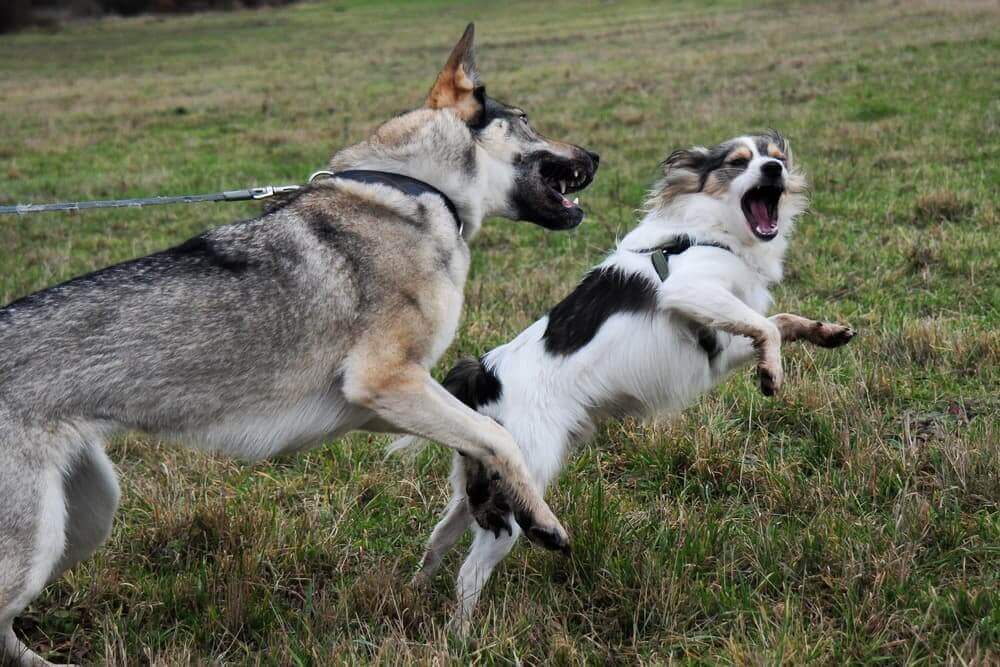 The ASPCA shares that mouthing is part of a normal dog’s repertoire but that dogs tend to bite in response to either frustration or fear – and deciphering the difference can be difficult. Further, mouthing can precede aggression. The difference between aggressive and playful behaviors can be read in the dog’s body language. A playful dog generally displays a relaxed body and facial expression – without much tension in the facial muscles. An aggressive dog, on the other hand, will take on a stiff appearance, which may include a wrinkled muzzle and the baring of teeth.
Because the line between aggressive and playful is very fine, dog owners must accept the immense responsibility of teaching their pets not to engage in playful practices that could cross the line into aggressive behavior. The risk of someone suffering dog bite injuries is all too real.
The ASPCA shares that mouthing is part of a normal dog’s repertoire but that dogs tend to bite in response to either frustration or fear – and deciphering the difference can be difficult. Further, mouthing can precede aggression. The difference between aggressive and playful behaviors can be read in the dog’s body language. A playful dog generally displays a relaxed body and facial expression – without much tension in the facial muscles. An aggressive dog, on the other hand, will take on a stiff appearance, which may include a wrinkled muzzle and the baring of teeth.
Because the line between aggressive and playful is very fine, dog owners must accept the immense responsibility of teaching their pets not to engage in playful practices that could cross the line into aggressive behavior. The risk of someone suffering dog bite injuries is all too real.
Practices to Avoid
Before getting down to the main agenda of teaching your dog not to bite, it’s important to address some practices that you’re well advised to avoid, including:- Don’t turn your back on all playful activities with your pet. Play fosters a strong bond between humans and their dogs, and the goal is to teach gentle play rather than banning all play.
- When you’re attempting to engage your dog in play, avoid waving your fingers or toes in their face and avoid tickling the sides of their face – both of which can encourage pretend biting or mouthing.
- When your dog is mouthing you, refrain from jerking your hand or foot away. Such motions can signal play to your pup, which can escalate to more aggressive play. If your dog is mouthing your hand or foot, the best approach is allowing your body part to go limp, which makes the play a lot less fun for your pet.
- Don’t use slapping or hitting motions to stop your dog from mouthing you, which can lead to more aggressive play. Additionally, if your actions are perceived as physical punishment, your pooch can learn to fear you, which can lead to actual aggression.
- Refrain from using physical punishment that could scare or harm your pet as a means of teaching them not to bite. Your efforts are almost certain to backfire.
The Basics
When it comes to teaching your dog not to bite, there are several basics to keep in mind.Spay or Neuter Your Pet
While spaying or neutering your pup is not a cure-all and in no way guarantees your dog won’t bite, VCA Animal Hospitals share that it’s associated with decreased aggression. There are many excellent reasons for choosing to spay or neuter your dog, and helping to prevent dangerous dog bites is high on the list.Socialize Your Pet
Dogs who aren’t exposed to new experiences tend to be more fearful of them, which is closely associated with aggression. Socializing your pet exposes them to new people, situations, and places, and when you keep the experiences positive, it teaches your pet not to fear the unknown. This can help greatly decrease their anxiety and frustration – both of which are closely associated with aggression. Your dog is never too old to improve their socialization – in controlled settings.Never Assume that Your Dog Won’t Bite
If the situation is right, any dog can go rogue and bite someone. As a pet owner, you should never assume that your dog is excluded from this characterization. Just because your pet has never exhibited aggression in the past doesn’t mean that it won’t in the future, which makes hypervigilance key.Use Positive Reinforcement with Your Pet
Positive reinforcement refers to rewarding your dog’s appropriate behaviors – instead of focusing on those behaviors you’re attempting to change, such as aggression. The kinds of things that qualify as positive reinforcement include all the following:- Extra petting and belly scratching
- Extra playtime
- Praise and encouragement
- Doggie treats
- Anything else your pup loves
Focus on Obedience Training
Obedience training for dogs is highly effective, and obedient dogs are far easier to control. The more obedient your dog, the more focused they are on you and your commands, which improves your ability to avoid aggressive behaviors in your pet.Know Your Pet’s Body Language and Warning Signs
Your dog uses their body language to communicate with you, which makes understanding what they’re trying to tell you paramount. The basics include all the following:Confident
When your dog exudes confidence, it will stand tall and straight with its head held high in the same way a human would. Their ears will also be perked up, and their eyes will shine bright. While your dog’s mouth may be open, it should appear relaxed, and its tail may curl loosely, sway gently, or hang in a relaxed fashion. A confident dog is generally at ease with the situation, friendly, and non-threatening.Happy
A happy dog lets you know that they’re happy by giving you all the signals of confidence while including a tail wag and some light panting breaths. A happy dog looks friendly and shows no signs of anxiety or frustration.Playful
A playful dog takes happiness to the next level, which can include all the following:- Ears up
- Eyes bright
- Energetic tail wagging
Excited
An excited dog generally combines the physical expression of both happiness and playfulness – with some jumping, running around, panting, and even whining potentially thrown in for good measure. Your pet’s eyes will likely be wide, and their tongue may hang out of their mouth. Some dogs have a difficult time containing their excitement, which can lead to jumping on people and loud barking. Excitement can lead to overstimulation, which can segue into anxiety and even aggression. As such, excitement is a dog emotion that should grab your attention.Anxiety, Fear, and Aggression
An anxious dog generally lowers its head while holding its ears partially back with its neck outstretched. Your dog may even display a furrowed brow and will likely strike a tense posture. If your dog is fearful, these signs can become more pronounced and can include whining, growling, and the baring of teeth. Aggression typically evolves from anxiety and fear, and the signs can include pinned back ears and forward lunges with narrowed, piercing eyes. The dog may bare its teeth, snap its jaw, and growl or bark in a threatening manner. The progression from anxiety to aggression can be slow to build or can be nearly instantaneous, which makes knowing your dog’s warning signs essential.Teaching Bite Inhibition
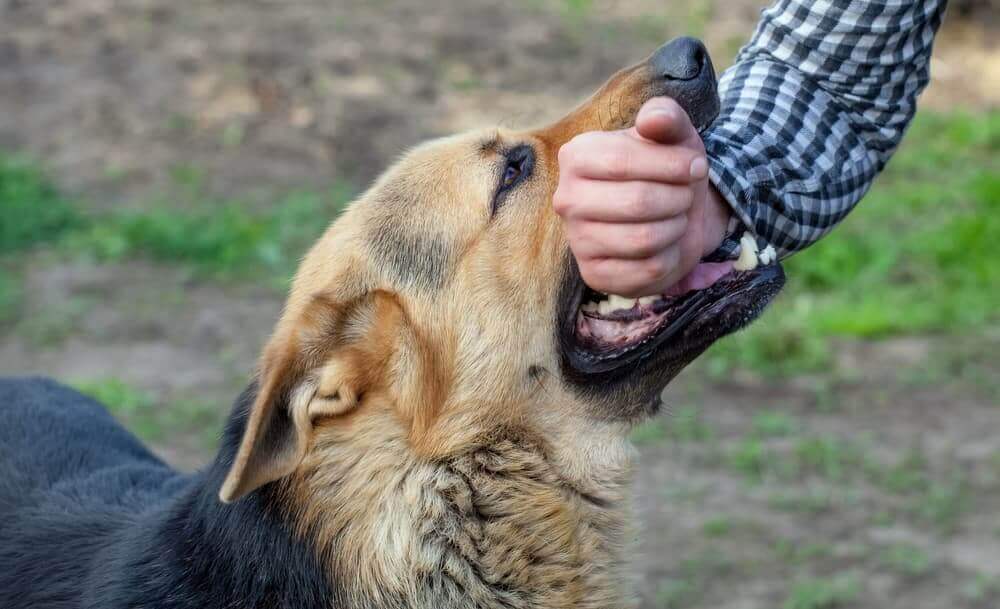 Puppies generally learn bite inhibition – or the ability to control the force they employ when mouthing – when they play with other dogs. Puppies tend to chase one another enthusiastically and engage in a good deal of pouncing and wrestling in the process, and occasionally, one of them will bite another a bit too hard. This leads to a yelp, which generally brings the play to an abrupt halt. The dog that did the biting hears the yelp and pays attention, taking a moment to process the information.
Finally, the young pups are likely to continue their frolicking. In this way, they learn to control the strength of their bites, which allows their play to continue uninterrupted.
Experts generally agree that if dogs can teach one another to play more gently, humans can accomplish the same goal with their pets. The suggested technique includes the following:
Puppies generally learn bite inhibition – or the ability to control the force they employ when mouthing – when they play with other dogs. Puppies tend to chase one another enthusiastically and engage in a good deal of pouncing and wrestling in the process, and occasionally, one of them will bite another a bit too hard. This leads to a yelp, which generally brings the play to an abrupt halt. The dog that did the biting hears the yelp and pays attention, taking a moment to process the information.
Finally, the young pups are likely to continue their frolicking. In this way, they learn to control the strength of their bites, which allows their play to continue uninterrupted.
Experts generally agree that if dogs can teach one another to play more gently, humans can accomplish the same goal with their pets. The suggested technique includes the following:
- Allow your dog to mouth your hand or foot in play.
- If your pet ever bites too hard, let out a high-pitched yelp that gets your dog’s attention.
- This should cause the animal to startle and stop mouthing you for at least a moment.
- Offer praise for a job well done.
- Give it another try, but never more than 3 times in any 15-minute interval.
Human Skin Training
Once you’ve taught your dog to be gentle, you can begin the process of teaching them not to mouth humans at all, which boils down to teaching them that their teeth and human skin don’t belong together. Tips for achieving this include:- It’s important to recognize that petting, scratching, or stroking your dog may leave them excited, which can lead to mouthing. Having a treat to distract them in one hand while you pet your dog with the other discourages inappropriate play.
- When your dog decides to chew on your fingers or toes, give them a bone or chew toy as a substitute.
- Help your pet to learn impulse control by teaching specific commands, such as wait, stop, sit, and leave it.
- Encourage the kind of play that doesn’t involve contact, such as tug-of-war and fetch, instead of wrestling and other forms of roughhousing. To ensure that your pup internalizes this lesson, keep a ball for throwing or a tug-of-war toy in your pocket or nearby – so it’s always on hand for redirecting your pooch.
- If your dog continues to engage in play that involves mouthing, go limp and take out a toy that you keep with you for this purpose. Don’t start moving the limb in your dog’s mouth again until they grab for the toy you’re providing.
- As you progress with the above, simply going limp should encourage your dog to let go of your hand or foot, and when they do, it’s time to pull out all the stops in terms of praise and encouragement.
- Make sure that your pet has plenty of stimulating toys around to chew on at will, which helps to ensure that they’ll lay off you.
- Ensure that your dog has plenty of opportunities to play with other well-behaved, vaccinated, and friendly dogs, which is a great way to burn off that excess energy that can lead to playful mouthing.