
A dog bite near the eye is one of the most serious types of facial injuries a person can suffer. Even if the eyeball itself is not punctured, a bite can damage the eyelid, tear ducts, muscles, nerves, orbital bones, or other structures that protect and support normal vision.
The location of these injuries can also increase treatment complexity. A wound that initially looks like a relatively small cut may involve deeper structures that cannot be evaluated simply by looking in a mirror.
The American Academy of Ophthalmology’s EyeWiki guide to periocular dog bites identifies eyelid lacerations, canalicular trauma, orbital fractures, and, more rarely, open-globe injuries as the potential consequences of dog bites around the eye.
For victims in New Jersey, understanding the potential medical consequences is important when documenting an injury and evaluating a compensation claim.
How Can a Dog Bite Cause an Eye Injury?
A dog’s teeth can cause penetrating injuries, while the force of the attack can also produce blunt trauma to the eye and surrounding structures.
The injury may involve several different parts of the eye and face.
Eyelid Lacerations
The eyelids provide important protection for the eyes. A dog bite can partially or completely cut through an eyelid, potentially affecting muscles, nerves, blood vessels, or the eyelid margin.
An eyelid injury can also be more serious than it initially appears. The American Academy of Ophthalmology notes that eyelid lacerations can occur alongside corneal abrasions, foreign bodies, orbital fractures, and injuries to the globe.
Repairing an eyelid requires precise care because even a relatively small change in its position can interfere with normal blinking or the eye’s ability to remain properly protected.
Tear Duct Damage
Tears normally drain through tiny openings near the inner corner of the eyelids and travel through the canalicular system toward the nose. A bite involving the inner portion of the eyelid can sever these structures.
Damage to the canaliculi can result in persistent excessive tearing, known as epiphora. A victim may therefore continue experiencing watering of the eye long after the original wound has healed.
This type of injury may require specialized examination and, in some cases, surgical repair. The American Academy of Ophthalmology specifically identifies canalicular injury as an important concern with periocular dog bites.
Corneal Scratches and Lacerations
The cornea is the clear front surface of the eye. A dog’s claw, tooth, or surrounding tissue can scratch or penetrate it during an attack.
A corneal abrasion may cause:
- Eye pain
- Excessive tearing
- Redness
- Light sensitivity
- Blurred vision
- A sensation that something is stuck in the eye
More serious penetrating injuries can threaten the integrity of the eye itself and require emergency ophthalmologic treatment.
Can a Dog Bite Damage the Eye Without Puncturing It?
Yes. Not every serious ocular injury involves a visible wound to the eyeball.
A bite or blow to the area can cause blunt trauma that affects internal structures of the eye. Medical sources describe injuries such as hyphema, which involves bleeding inside the front portion of the eye, as well as other internal ocular injuries.
The American Academy of Ophthalmology notes that dog-related ocular trauma can involve the cornea, eyelids, orbit, and internal structures of the eye.
That is one reason victims should not assume that an eye is unharmed simply because they can still see after an attack.
What Eye Symptoms Should I Watch For After a Dog Attack?
Some eye injuries produce obvious symptoms immediately. For example, blunt force trauma can lead to immediate vision changes requiring urgent medical analysis. Other damage only becomes more apparent as swelling decreases or the victim resumes normal activities.
After a dog attack, concerning symptoms can include:
- Blurred or decreased vision
- Double vision
- Severe or persistent eye pain
- Light sensitivity
- Excessive tearing
- Blood in or around the eye
- Difficulty opening or closing the eyelid
- A change in the shape or position of the eye
- Unequal pupils
- Numbness around the eye
- Persistent redness or swelling
- Difficulty moving the eye
MedlinePlus’ guidance on eye emergencies explains that cuts, scratches, blunt injuries, and other trauma to the eye or eyelid require prompt medical attention. The experts also note that victims should avoid rubbing or pressing on an injured eye and should not attempt to remove an object that may have penetrated the eye.
Children Face The Highest Risks From Dog Bite Eye Injuries
Children can be especially vulnerable to facial and periocular dog bites because of their height and the proximity of their faces to dogs during an attack.
A study of nearly 2,000 children with dog bites found that facial injuries were common, and 230 children with facial dog bites had ophthalmic damage. Most of those injuries involved the eyelids or surrounding ocular structures rather than the eyeball itself.
Another study found that children were approximately twice as likely as adults to sustain isolated periorbital dog bite injuries.
These injuries can have consequences beyond the initial emergency treatment. Children may require additional procedures as they grow, particularly when an injury affects the eyelid, tear drainage system, facial nerves, or facial appearance.
Why Medical Documentation Matters in an Eye Injury Claim
Eye injuries can involve a long treatment process. A victim may initially receive emergency care, followed by treatment from an ophthalmologist, oculoplastic surgeon, plastic surgeon, or other specialist. Additional procedures may become necessary if scarring, tearing, eyelid dysfunction, nerve damage, or other complications develop.
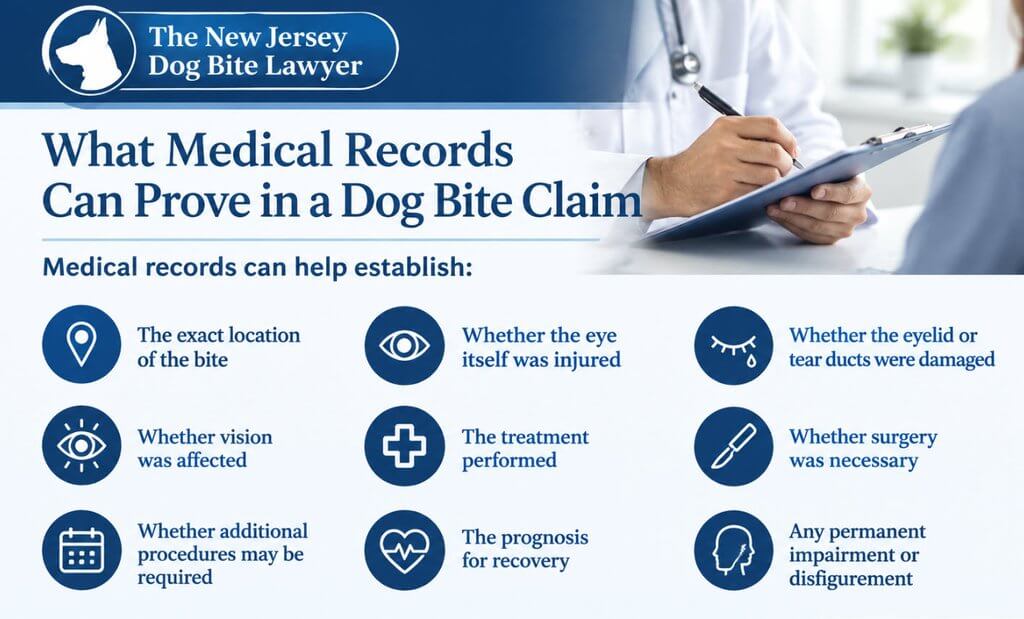
Photographs can also be important. A victim should preserve photographs taken shortly after the attack and during the healing process when possible.
What Compensation May Be Available for an Eye Injury?
New Jersey’s dog bite statute generally imposes strict liability when a dog bites a person who is in a public place or lawfully in a private place, regardless of whether the dog previously demonstrated vicious behavior.
A serious eye injury can involve much more than the initial emergency-room bill.
Depending on the circumstances, a New Jersey dog bite claim may involve medical expenses, future treatment, lost income, pain and suffering, permanent scarring, disfigurement, vision impairment, and other losses associated with the injury.
The long-term consequences of dog bites to the eye and face can be particularly impactful. A victim who requires reconstructive surgery, treatment for persistent tearing, corrective procedures, or ongoing ophthalmologic care may face expenses and limitations long after the original bite wound has closed.
Your Eye Injury Case Begins with a Free Dog Bite Lawyer Consultation

The New Jersey Dog Bite Lawyer team has won complex eye and facial dog bite injury cases throughout the state. David J. Cowhey and Rob Morello focus exclusively on dog bite cases and have 60 years of combined experience in New Jersey courtrooms and at the insurance company negotiating table, fighting for dog bite victims.
Examples of the firm’s facial attack case wins include:
- $1 million dog bite settlement for a child with facial injuries and permanent scarring
- $100,000 for a Monmouth County boy with structural facial injuries after a dog attack
- $225,000 for a Burlington County woman with severe facial injuries and scarring
Schedule your free consultation today or call (609) 513-0627 to speak with a dog bite lawyer immediately about your dog attack injury case.